.svg "acsw-vlag(dun)")

Gut feeling vs. hard facts: Why data should guide your decision making
19 Apr 2024


Some people say they “work in education”. And then there are people like Tom Spilliaert: someone who truly knows education from the inside, having started out in the classroom. From standing in front of pupils to sitting behind “the headteacher’s desk”, as he puts it. Today, he helps schools see the wood for the trees when it comes to educational technology.
Tom is 34, has nearly ten years of experience in education, and became Flanders’ youngest headteacher at the age of 29. He is now the main point of contact for secondary schools at Academic Software / Signpost Group, with a clear mission: helping schools choose tools that actually solve problems, instead of simply adding “yet another app or tool”.

And one of the tools he is particularly enthusiastic about? Kami (pronounced Kaa-mee). A platform that makes documents interactive: writing on PDFs, collaborating, giving feedback (yes, including audio), and above all supporting pupils who might otherwise fall behind too quickly.
We spoke to Tom about his journey from French and English teacher to software adviser, why Kami is about much more than “going paperless”, and what he believes schools urgently need to make room for again.
Who is Tom Spilliaert, beyond your job title?
“My story actually started in a fairly classic way: I began as a French and English teacher. But I’ve always had a healthy interest in IT, so I later became an ICT coordinator, mainly with a pedagogical focus. And after three years… I became a headteacher. That happened very quickly. I was 29, the youngest headteacher in Flanders.”
That’s quite an entrance. Did you see that coming?
“Absolutely not. I never expected to be selected for that role. But I really loved the job. I only stopped after my first son was born and needed some extra care. Combining that with the job — and the flexibility I needed — became difficult. And on top of that, I was working in a school with a very traditional mindset. Wonderful, but changing things there can sometimes feel like trying to turn an oil tanker.”
And that’s when Signpost came onto your radar?
“Signpost had already been on my radar for a long time as a partner of our school. Eventually, they contacted me and I started working there. I’ve been there for two years now. Today, I’m the first point of contact for secondary schools in Flanders for everything software-related: security, AI, training programmes… basically everything except hardware.”

 What do you see going wrong most often when it comes to schools and digital tools?
“There’s a massive supply of tools. Schools are overwhelmed with applications. Teachers engage with them with the best intentions, but there’s often very little policy behind it: which tools do we use, for what purpose, and why? Is it just a ‘nice-to-have’, or does it fit into your care policy, your assessment approach, your long-term vision?”
So you’re essentially doing… digital matchmaking for schools?
(laughs) “You could put it that way. It often starts with the question: where do you want to be in three to five years’ time? Only then do you look at which tools fit that vision. Kami is already a crucial example of that.”
 Is Kami indispensable for schools?
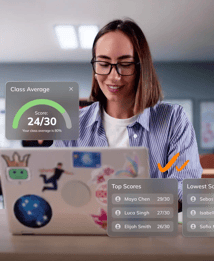
“For me, Kami is essentially the app that replaces paper but in a smart way. You can write in documents, add notes, underline, highlight, colour-code… everything you used to do with highlighters and pens, but digitally. And you can do that on PDFs, worksheets, scans, anything.
But Kami is much more than just ‘PDF annotation’. It’s a genuine learning platform where pupils and teachers can work together in documents, give feedback, and where teachers can respond very precisely to what a pupil is doing. Think margin comments, voice feedback, quickly marking corrections… without having to hand out and collect twenty paper copies.
What I also find very important is the strong accessibility toolkit. For pupils who struggle with reading or writing, text can be read aloud, answers can be dictated, and extra support can be offered without it feeling stigmatising. That really makes a difference in the classroom.
Now, to be clear: I’m still a big advocate of actual handwriting, pen on paper. That remains important, especially for motor skills and learning processes. But if you are working digitally, and that’s happening more and more, Kami is a tool that fits very naturally with how teachers and students already work, instead of adding yet another complex system on top.”
How did you first come across Kami?
“When I was still working in a school. We were in a Google environment with Chromebooks. In that case, you’re largely dependent on browser-based tools. And we had pupils with dyslexia, dyspraxia, and other needs who required extra support. With Chromebooks, that used to be quite limited. Kami suddenly provided a solution that actually worked in that context.”
Many schools want to go paperless, but it often remains an ambition. What made it tangible for you?
“Printing costs. That’s one of those lines on the school budget where you think: where is all that money even going? It can easily run into hundreds of euros. With Kami, we were able to reduce those costs significantly, while at the same time supporting pupils who needed extra help.”
What did that look like in practice?
“A teacher creates a test or worksheet in PDF or Word, and instead of printing it, sends it digitally. Pupils open it in Kami and can fill it in, highlight, have it read aloud, whatever they need.”
You mentioned ‘whatever they need’. Where do you see Kami really making a difference?
“With language. Especially for OKAN pupils* — newly arrived pupils with a different home language. Kami includes tools for text-to-speech, speech-to-text, and even translation. That gives pupils who haven’t yet mastered the language a real chance to keep up.”
These are secondary school classes where young people who have only recently arrived in Belgium first learn Dutch intensively, while also becoming familiar with how our education system works.
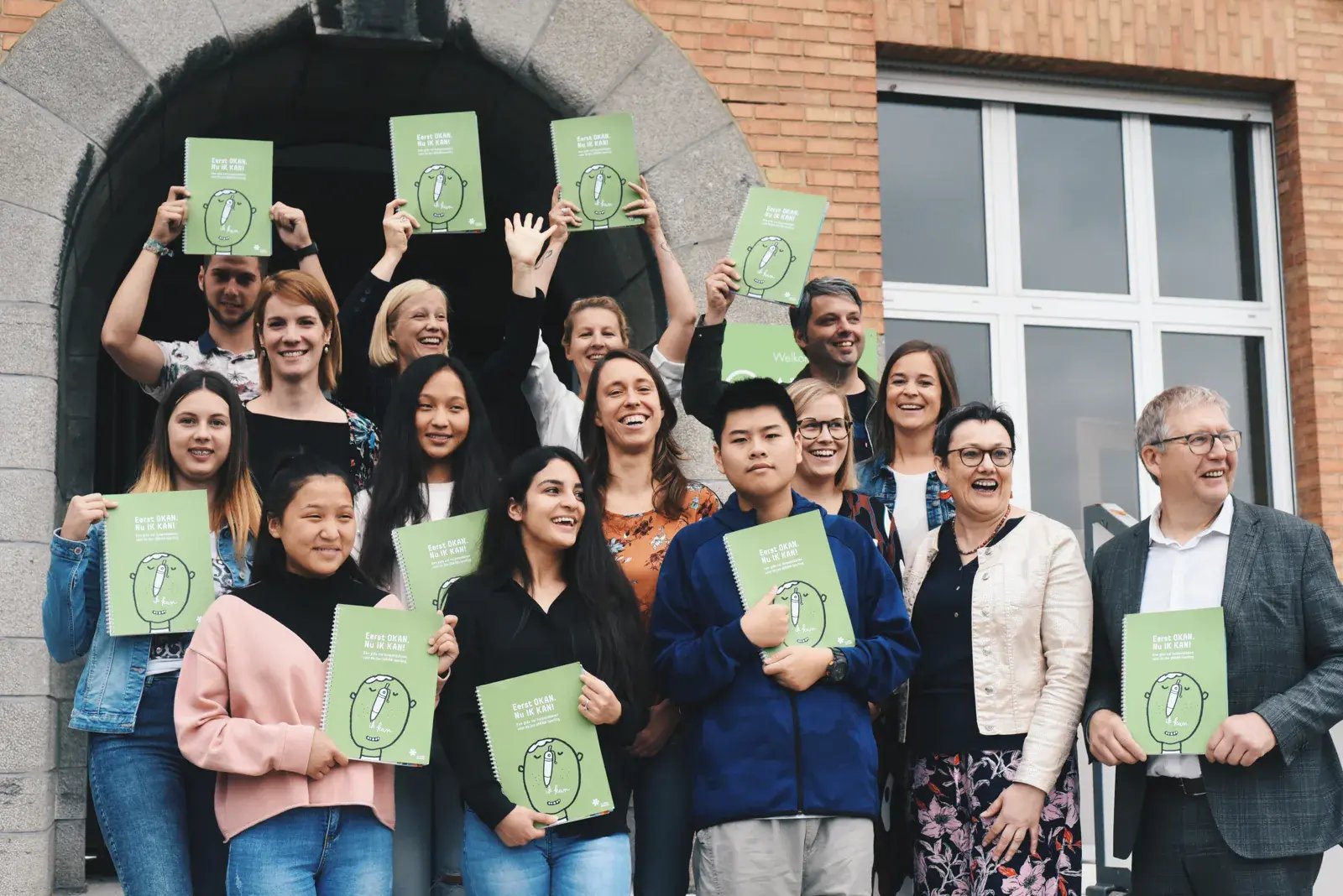
Source: https://pers.vlaamsbrabant.be/eerst-okan-nu-ik-kan
That almost sounds… feel-good.
“It really is. When a pupil manages to submit an assignment in Dutch for the first time, even with support, you see the impact immediately. Those are small victories. Well, small? They’re huge victories for OKAN pupils.”
You also shared a striking example about pupils who were literally ‘drowning’ in class.
“Yes. I’ve had pupils who ended up in the A stream but still needed to learn how to write. Completely illiterate. They don’t write letter by letter, but movement by movement, copying what the teacher writes on the board. It’s madness. And if you don’t support them, they disengage — and you lose them.”
What are the biggest advantages for teachers?
“That you can follow along in real time. Take a geography exercise: ‘mark the rivers on the map’. Instead of walking around the classroom and only noticing too late where things go wrong, you immediately see: okay, ‘Charlie’ is stuck. Then you can give feedback straight away.”
And that feedback isn’t just typed?
“No. You can also give audio feedback. It saves time, but it’s also more human. Spoken feedback often lands more gently than written feedback, especially for vulnerable pupils.”
Schools often sigh when they hear ‘we’re introducing a new tool’. How do you get people on board?
“By keeping the barrier as low as possible. Integrations are absolutely crucial. If a tool doesn’t align with how a school already works, people will disengage.”
Kami integrates strongly with Google Classroom, right?
“Yes. In a Google environment it’s very logical: Kami works as a browser extension and integrates seamlessly with Google Classroom.”
And if a school uses Microsoft?
“That’s possible too. You then work with OneDrive or SharePoint, Teams, and share documents through your existing channels. Kami fits into that as well.”
You’ve mainly spoken about the school context, but what about parents?
“Parents can benefit from accessibility as well. Think of school letters, something that needs to be signed can be done digitally. And if Kami is installed as an extension, text can be read aloud or even translated.”
And parents can follow along more easily?
“Yes. Digital formats often make it easier to quickly check: where is that assignment, what still needs to be done… and everything stays in one place.”
Do you think AI and digital tools are becoming basic skills, like reading and writing?
“Yes. Education prepares the next generation for the labour market and society. AI isn’t going away. So pupils need to learn how to use it responsibly, but above all, critically.”
Critical thinking as a subject in itself.
“Exactly. That critical mindset is a sensitive issue. What AI produces, what young people see online, which sources are reliable… These are things we have to teach. It’s not easy, but it is our responsibility”
You also mentioned that as a headteacher you organised annual media literacy sessions.
“Yes. On cookies, portrait rights, copyright, how to tell whether someone is real online, how to deal with sexting… practical topics that really matter to young people. And it stuck. I was still being asked about it a year later.”
If you could give one message to schools that are hesitating, what would it be?
“I strongly believe pupils need to write, absolutely. But there are many moments where digital tools make sense: to reduce paper load, to give faster feedback, to collaborate, to be more inclusive. And yes: to reduce costs.”
And Kami is one of those tools that solves several problems at once?
“That’s exactly it. Less paper, more support, more insight, and more opportunities for pupils who would otherwise fall behind too quickly."
Does Kami sound like the right tool for you? Discover it in our software library.